A Metástase da GlobalizaçãoThe Metastasis of Globalization
Quando a exceção vira a regra.When the exception becomes the rule.
Hoje uma garota brasileira foi encontrada morta em um vala em um vulcão na Indonésia. Eu me recuso a procurar mais detalhes da história, mas é impossível fugir de tudo. Por um lado, há pessoas histéricas quanto à morte em si: elas acham que poderia ter sido feito mais em favor da menina. Do outro, detratores se enfileiram para relembrar minúcias políticas. A discussão acalorada entre os dois lados ressalta algumas coisas curiosas com relação à maneira com que convivemos com um fenômeno que juraríamos que extinguiria as barreiras do mundo.
As fronteiras
Não houve outra época no mundo em que fronteiras fossem descritas com tanta frequência e veemência como “apenas linhas em um mapa.” De fato, há linhas em um mapa, e também há um certo grau de arbitrariedade nelas. Atravessar a fronteira imaginária entre os Estados Unidos e o Canadá não é a mesma coisa que pular em uma piscina. Não estaríamos subitamente em outro meio onde tudo é diferente. Exceto pela faixa de árvores cortadas, não haveria mudança de clima ou de iluminação, nem de vegetação; apenas de jurisdição, carga tributária e minúcias jurídicas que, no mais dos casos, podemos ignorar.
Mas há uma fronteira real. Assim que o americano percebe que ninguém está muito disposto a falar a única língua do mundo, ele percebe que ali já não é mais a América. Esta é a maneira natural de compreender a diferença entre dois povos. Nem sempre houve fronteiras que traçavam os limites entre territórios pertencentes a um povo e aqueles pertencentes a outro. Quando surgiram, mal tinham condições de serem tão precisas como são hoje — a título de curiosidade, podemos ver a quantidade de maluquices fronteiriças que foram notadas depois dos satélites.
A realidade é que estas fronteiras delimitam uma distinção que existe na realidade, mas cuja suavidade pode fazer com que a esqueçamos: passada a linha imaginária, tudo que conhecemos pode mudar, todas as convenções que aceitamos podem ser diferentes, e nossos valores e visões podem não ser equivalentes aos que vigoram por ali.
O Ocidente
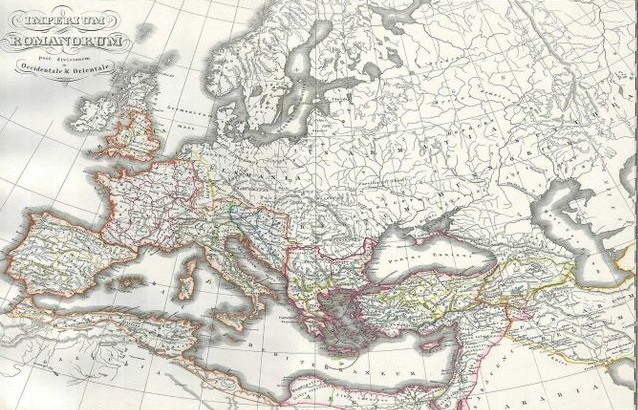
Algo curioso que às vezes não percebemos é que há alguns conceitos que aprendemos por osmose na vida que não têm uma definição precisa. “Ocidente” é um deles. É impossível conversar com duas pessoas e ouvir de ambas o mesmo conceito de Ocidente. Para alguns, o Ocidente é o campo de atuação do Império Romano Ocidental; outros privilegiam visões mais relacionadas à Europa e às civilizações do Atlântico Norte. Há um debate acalorado acerca da posição do Brasil com relação ao Ocidente: a favor, contra, fora, dentro etc.
Mas se você não está no Ocidente, você sabe que não está no Ocidente. É comum perceber que pessoas que viajam ao Japão poderiam resumir sua experiência de conviver com as pessoas, os valores e tudo mais de uma outra civilização como uma coisa totalmente diferente. Sim, é totalmente diferente, e este é o fulcro da questão. É necessário aceitarmos, a partir deste ponto, que há diferenças sensíveis entre civilizações — e dentro das civilizações, entre países; dentro dos países, entre povos — e que estas diferenças são percebidas e transmitidas culturalmente.
E o orientalismo?
É normal vermos coisas diferentes como exóticas, indomáveis, místicas. Os contatos entre o Ocidente e o Oriente por muito tempo se resumiram em percepções completamente distorcidas um do outro. O ocidental costumava ver o oriental como uma criatura mística, um ser feito de temperos exóticos e visões religiosas mágicas. Talvez os orientais pensassem o mesmo dos ocidentais, resguardadas as devidas diferenças. A África ainda é vista desta maneira por muitas pessoas.
Por muito tempo, pensar no Oriente era pensar em artes marciais, quimonos, incensos, chás e rituais, então observar tudo por um filtro estrangeiro: artes marciais místicas, quimonos exóticos, incensos psicodélicos, chás encantados, rituais mágicos. Mas este tipo de distorção ainda carrega um tipo de respeito: você dá ao outro o crédito de ser diferente. Você não presume dele o que é inimaginável, que apesar de todas as diferenças ele é igualzinho a você, mas que ele diferente em tudo — em alguns casos mais mágico, noutros mais materialista, e cada um teve sua dose de distorção.
A Globalização nisto tudo
Tendo sido criado para referir mais especificamente à integração global das cadeias de produção e serviços, “globalização” foi um termo apropriado, em geral pelos sociólogos, para descrever a integração de características entre diversas sociedades. É um nome para o fenômeno do brasileiro comendo pizza, do americano tomando latte, do alemão comendo seu döner, todos assistindo Friends numa televisão japonesa sentados em sofás italianos sobre um tapete persa.
Existem sinergias culturais. Os EUA dominaram a cultura da anglosfera em grande parte porque é infinitamente mais simples o peão inglês se integrar com o americano do que com o francês. Mas da mesma maneira é mais fácil um francês ser assimilado por um inglês que por um japonês — este evento inclusive ocorreu no século XI. Por várias razões, neste contexto a cultura americana se tornou uma espécie proxy da cultura global.
Para os caipiras brasileiros se comunicarem com os metidos franceses bastava usar a cultura americana como intermediário (inclusive, e talvez principalmente, a língua inglesa). Em tudo os cidadãos globais passaram a buscar pontos de convergência a partir do hegemon. Sociedades de baixíssimo nível de sinergia com o Ocidente passaram a se integrar à cultura ocidental, aprendendo a língua, adotando referências. Isto, entretanto, é uma máscara. Tudo é uma interface por meio da qual o contato entre duas coisas completamente distintas pode ser realizado.
A metástase da globalização ocorre quando nós confundimos esta interface — ou o significado dela — com um grau maior de sinergia civilizacional. O fato de existirem aparatos que integram duas civilizações não implica na tradução direta de nossos conceitos para os conceitos alheios. Em tempo, também, não existe garantia de atemporalidade de nenhum destes conceitos, nem de um lado, nem do outro.
E a tragédia da garota entre justamente aí, assim como a reação das pessoas.
O aparato propagandístico deste estilo de vida turístico que a classe média decadente adota é completamente descolado da realidade aristocrática do ato. Escalar montanhas há uns 100 anos era coisa de gente muito específica, como São Pier Giorgio Frassati, mas hoje se multiplicam expedições que fazem isto para o maior e mais diverso público possível. É óbvio que tudo é muito legal e seguro: aparece no Instagram e aceita Visa, logo, é como ir ao McDonalds.
Não é incomum vermos este tipo de coisa terminar em tragédia. A pessoa vai fazer uma viagem espiritual à la Comer, Rezar e Amar à Índia e acaba sofrendo um estupro coletivo; vai conhecer as pirâmides do Egito e acaba sequestrada e assassinada; vai a uma rave em Israel e é atacada pelo Hamas. Será que todos estes riscos foram cuidadosamente considerados? Eu diria que não: a interface destas civilizações com o Ocidente foi entendida como um espelho de valores e situacional. As civilizações relacionadas foram tratadas de maneiras simplificada, como se fosse possível selecionar uma parte da experiência da mesma maneira que é possível selecionar um item sem maionese em um fast food.
Mas a Indonésia é um negócio inteiro, não tem como comprar seu vulcão sem comprar o fato de que eles não vão entrar em histeria total e tentar recuperar qualquer pessoa a qualquer custo, empreendendo os mesmos esforços que seriam empreendidos por bombeiros novaiorquinos em situação similar. Se você vai escalar o Monte Everest, deve considerar a possibilidade de virar uma referência morta, congelada: “dê 20 passos ao leste depois de encontrar o corpo do jovem iludido de casaco vermelho”. Os conceitos moralistas dos jovens que estão em choque com a vagareza — ou mesmo inação — do governo indonésio provavelmente não se traduzem na cultura deles em alguma coisa compreensível.
Se não fosse o caráter inconsciênte dessas escolhas, eu poderia dizer “que quem quer passar além do Bojador tem que passar além da dor”, mas para ir até onde Deus espelhou o céu, temos de saber que podemos ir realmente parar no céu (ou pior).
Translated from the Portuguese original by the site. Switch to PT to read the author's text.
Today a Brazilian girl was found dead in a ravine on a volcano in Indonesia. I refuse to look up more details of the story, but it is impossible to escape all of it. On one side, there are people hysterical about the death itself: they think more could have been done for her. On the other, detractors line up to bring back political minutiae. The heated argument between the two sides brings out some curious things about the way we live with a phenomenon we would have sworn was going to abolish the world's borders.
Borders
There has never been another age in which borders were described so often and so vehemently as “just lines on a map.” There are, indeed, lines on a map, and there is a certain degree of arbitrariness in them. Crossing the imaginary border between the United States and Canada is not like jumping into a swimming pool. We would not suddenly find ourselves in another medium where everything is different. Apart from the strip of cleared trees, there would be no change in climate or light, nor in vegetation; only in jurisdiction, tax burden and legal minutiae that, in most cases, we can ignore.
But there is a real border. As soon as the American realizes that nobody is very willing to speak the only language in the world, he realizes he is no longer in America. That is the natural way to grasp the difference between two peoples. There were not always borders tracing the limits between the territory of one people and that of another. When they appeared, they could hardly be as precise as they are today — as a curiosity, just look at the number of border oddities that were noticed only after satellites.
The truth is that these borders mark a distinction that exists in reality, but whose smoothness can make us forget it: past the imaginary line, everything we know may change, every convention we accept may be different, and our values and outlooks may not match the ones that hold sway there.
The West
Something curious we sometimes miss is that there are concepts we learn by osmosis over a lifetime that have no precise definition. “The West” is one of them. It is impossible to talk to two people and hear the same concept of the West from both. For some, the West is the domain of the Western Roman Empire; others favor views more tied to Europe and the civilizations of the North Atlantic. There is a heated debate about Brazil's place relative to the West: for, against, outside, inside, and so on.
But if you are not in the West, you know you are not in the West. People who travel to Japan often sum up the experience of living among the people, the values and everything else of another civilization as something completely different. Yes, it is completely different, and that is the crux of the matter. From here on we have to accept that there are perceptible differences between civilizations — and within civilizations, between countries; within countries, between peoples — and that these differences are perceived and passed on culturally.
What about Orientalism?
It is normal to see different things as exotic, untamable, mystical. For a long time, contact between West and East came down to completely distorted perceptions of one another. The Westerner used to see the Easterner as a mystical creature, a being made of exotic spices and magical religious visions. Perhaps Easterners thought the same of Westerners, due differences aside. Africa is still seen this way by many people.
For a long time, thinking of the East meant thinking of martial arts, kimonos, incense, teas and rituals, and then seeing everything through a foreign filter: mystical martial arts, exotic kimonos, psychedelic incense, enchanted teas, magical rituals. But this kind of distortion still carries a kind of respect: you give the other the credit of being different. You do not presume of him the unimaginable — that despite all the differences he is just like you — but that he is different in everything: in some cases more magical, in others more materialistic, and each side had its dose of distortion.
Where globalization fits in
Coined to refer more specifically to the global integration of production and service chains, “globalization” was a term appropriated, mostly by sociologists, to describe the blending of traits across many societies. It is a name for the phenomenon of the Brazilian eating pizza, the American drinking a latte, the German eating his döner, all watching Friends on a Japanese television, seated on Italian sofas over a Persian rug.
Cultural synergies exist. The US came to dominate the culture of the Anglosphere largely because it is infinitely simpler for an English working man to blend in with an American than with a Frenchman. But in the same way, it is easier for a Frenchman to be assimilated by an Englishman than by a Japanese — which, incidentally, happened in the eleventh century. For various reasons, in this context American culture became a sort of proxy for global culture.
For Brazilian country folk to communicate with snooty Frenchmen, it was enough to use American culture as an intermediary (including, and perhaps above all, the English language). In everything, global citizens began to look for points of convergence through the hegemon. Societies with very little synergy with the West began to integrate into Western culture, learning the language, adopting the references. This, however, is a mask. It is all an interface through which contact between two completely different things can take place.
The metastasis of globalization happens when we mistake this interface — or its meaning — for a greater degree of civilizational synergy. The existence of devices that connect two civilizations does not mean our concepts translate directly into theirs. Nor, for that matter, is there any guarantee that any of these concepts is timeless, on either side.
And that is exactly where the girl's tragedy comes in, as does people's reaction to it.
The propaganda apparatus of the touristic lifestyle adopted by the decadent middle class is completely detached from the aristocratic reality of the act. A hundred years ago, mountain climbing was a thing for very particular people, like Saint Pier Giorgio Frassati; today, expeditions multiply that offer it to the largest and most varied public possible. Of course it is all very nice and safe: it shows up on Instagram and takes Visa, so it is like going to McDonald's.
It is not unusual to see this kind of thing end in tragedy. Someone goes on an Eat, Pray, Love–style spiritual trip to India and ends up gang-raped; goes to see the pyramids of Egypt and ends up kidnapped and murdered; goes to a rave in Israel and is attacked by Hamas. Were all these risks carefully weighed? I would say not: the interface between these civilizations and the West was taken as a mirror of values and circumstances. The civilizations in question were treated in a simplified way, as if one could pick a part of the experience the way one orders an item with no mayo at a fast-food counter.
But Indonesia comes as a whole; you cannot buy its volcano without buying the fact that they will not go into total hysteria and try to recover anyone at any cost, with the same effort New York firefighters would make in a similar situation. If you are going to climb Mount Everest, you must consider the possibility of becoming a dead, frozen landmark: “walk twenty paces east after you find the body of the deluded young man in the red jacket.” The moralistic concepts of the young people shocked at the slowness — or even the inaction — of the Indonesian government probably do not translate into anything intelligible in their culture.
Were it not for how unthinking these choices are, I could say, with Pessoa, that “whoever would sail beyond the Bojador must sail beyond sorrow”; but to go where God mirrored the sky, we must know that we may really end up in heaven (or worse).